
The Evolution of Seahorses
Fossil Seahorses and Other Biota from the Tunjice Konservat-Lagerstätte, Slovenia by Jure Žalohar & Tomaž Hitij. Manchester, UK: Siri Scientific Press, 2014. Language: English. Hard cover, 176 pp, 47 illustrations, 173 color photos, £69.99. ISBN 978-095745304-3.
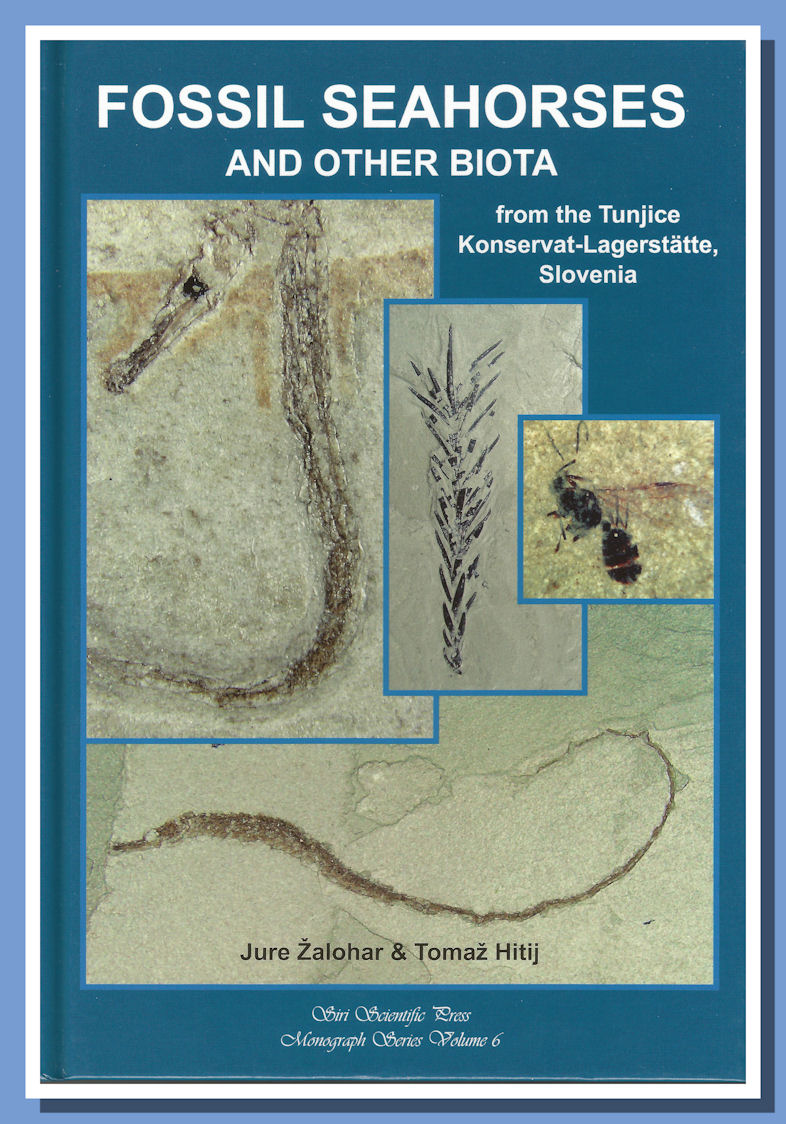
Early in 2014, the British publisher, Siri Scientific Press, other of whose publications we've reviewed (here and here), released a new book on the evolution of seahorses, a pleasant surprise on a topic regarding which professional literature is scarce. These charming little animals have piqued human curiosity for thousands of years. Even in the long-ago past (from primitive tribes to the Phoenicians, Greeks, and Minoans, among others), humans were fascinated by seahorses, and archaeologists have discovered depictions of them all over the world. In traditional Chinese medicine, seahorses have long been valued for their therapeutic properties, and these poor animals are still captured and left to dry each year by the thousands, a practice that has contributed significantly to their decline.
So what do seahorses look like? In some ways, they almost seem to be a joke played by Mother Nature, an animal composed of "parts": the head of a horse, a midsection resembling that of a kangaroo, eyes like a chameleon's, and a monkey's prehensile tail for anchoring themselves to seaweed!
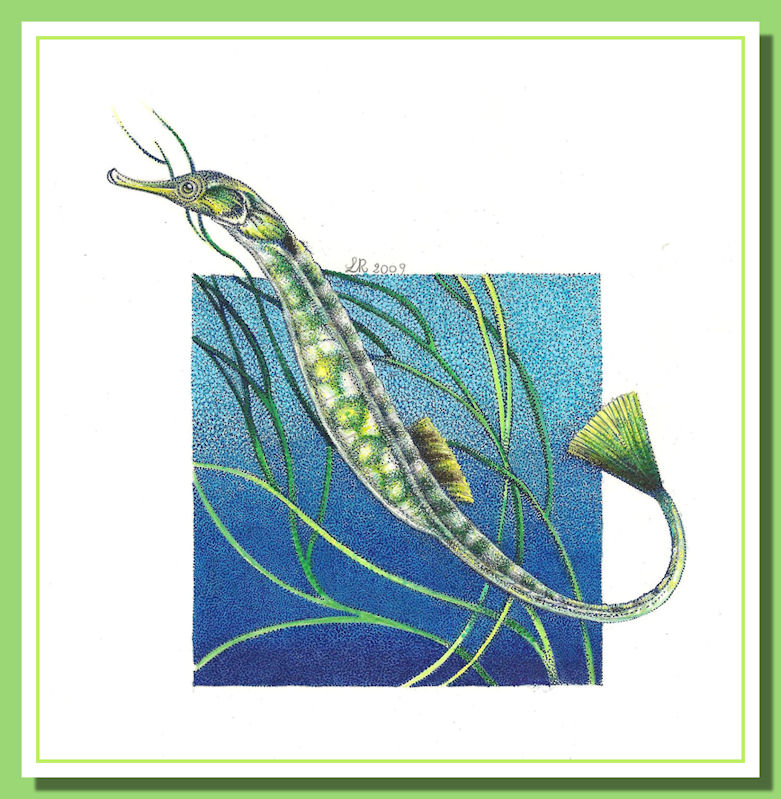
paleoart by Loana Riboli ©
The exposure to which Žalohar and Hitij's book is dedicated is located in the Tunjice Hills of Slovenia. The earliest studies of the site date to the 1800s, when the Austro-Hungarian Geological Society began mapping the area in search of new sources of coal. Over the years, scientists have collected a large variety of fossils from the site, all of which range from Oligocene to Miocene in age. Today, they are housed at the Slovenian Museum of Natural History in Ljubljana.
Millions of years ago, the area of Slovenia that is now the Tunjice Hills was covered by water, and fossils from the area provide clear evidence of the geological transformations that Slovenia has undergone. Excavations have revealed not only entire fossilized reefs along with their resident organisms (corals, gastropods, bivalves, echinoderms, brachiopods, and serpulid worms) but also the remains of large fish and mammals (including fossils of rhinoceros and other ungulates and of crocodiles).
As the sea at Tunjice was slowly transformed over time, the area was inhabited by conifers, crabs, mangroves, and proboscideans (which include modern-day elephants) that migrated between Africa and Eurasia even as sharks, rays, and whales swam in the open sea.
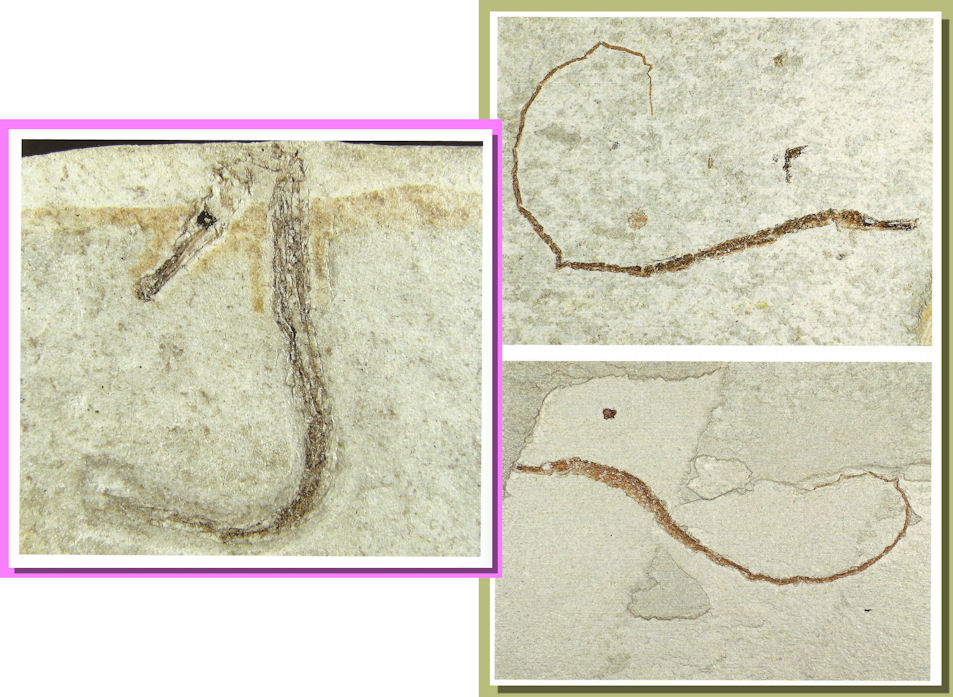
In 1997, blocks of marl and clay were discovered in the Tunjice Hills that held never-before-seen fossil remains, including numerous skeletons of teleost (bony) fish along with fossils of insects and plants. Because of the abundance of fossilized excrement or coprolites of middle Miocene fish, birds, and marine mammals found there, the deposit was named the Coprolitic Horizon.
The most important fish found in the Coprolitic Horizon are members of the Family Syngnathidae, more commonly known as seahorses and pipefish, a large group of saltwater fish (in the fossil record they are known from freshwater and estuarine environments as well). What members of the Syngnathidae have in common are not only their unusual physical characteristics but an exceptional form of reproduction in which the male of the species incubates the fertilized eggs and cares for them until they hatch (a process sometimes called "male pregnancy"). The Syngnathidae are fairly well known in the fossil record from the Mediterranean to the Black Sea and have also been recovered from central Europe and California. The Syngnathidae are divided into two subfamilies: the Syngnathinae, which includes the pipefish (with a thin, elongated, snakelike body and a tiny caudal fin) and ribboned pipehorses (also called sea dragons; they are similar to seahorses, though they adopt a horizontal swimming posture), and the Hippocampinae, which includes seahorses (which swim with an erect, vertical posture and have prehensile tails).
At present, the widest variety of fossil Syngnathidae in the world come from the Tunjice Hills. Scientists have recovered several species of pipefish, a species of worm pipefish, the oldest known sea dragon, pygmy pipefish, seahorses, and their pygmy ancestors.
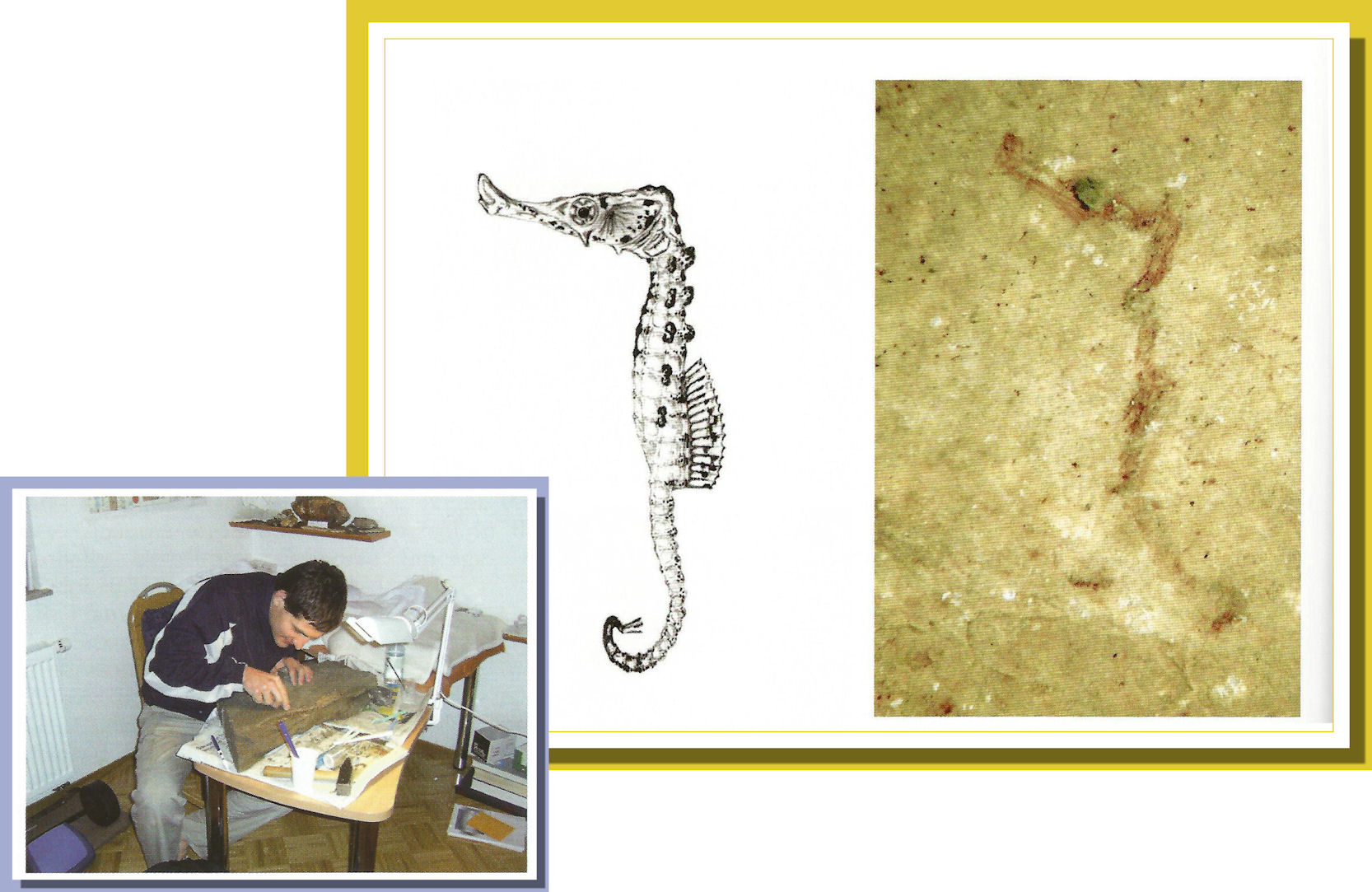
Between 2007 and 2009, systematic excavations were carried out in the Tunjice Hills, and fossils of the oldest seahorses and pygmy pipehorses in the world were brought to light. The discovery became a sensation in the worldwide scientific community, and the Tunjice fauna was acknowledged as one of the most sensational paleontological finds of the century.
These new species were duly entered on the list of the 100 most extraordinary new species on the planet. Žalohar and Hitij's book describes these discoveries, which led to the classification of the Tunjice Hills as a Konservat-Lagerstätte of worldwide importance.
Fossil Seahorses, written by two scientists, is richly illustrated and describes each discovery from the Tunjice Hills site, even the most insignificant, in great detail. It is an enthusiastic account of the exploration of a fossil deposit that amazed even its authors. For anyone interesting in knowing more about one of the world's most fascinating fossils, Fossil Seahorses is an excellent choice.
Happy reading!
Diana Fattori © - translated by Wendell Ricketts - ProvenWrite.com